
Manual Wiper Systems: A Comprehensive Overview (02/06/2026)
Manual wiper systems, relying on direct driver input, offer a simple yet effective method for clearing windshield obstructions, ensuring visibility during inclement weather conditions․
Manual windshield wipers represent a foundational technology in automotive safety, predating the widespread adoption of electric systems․ These systems directly link the driver’s physical effort to the wiping action, offering a straightforward approach to maintaining visibility․ Unlike modern electric wipers activated by a switch, manual wipers require the operator to actively engage a lever or crank to initiate and control the blade movement across the windshield․
The core principle involves a mechanical linkage translating the driver’s input into a sweeping motion of the wiper arms and blades․ This direct connection provides a tactile feel and immediate response, though it demands continuous driver engagement during use․ While largely superseded by automated systems, understanding manual wipers provides valuable insight into the evolution of automotive technology and the fundamental principles of wiper operation․
Historical Context of Manual Wipers
The earliest iterations of windshield wipers emerged in the early 20th century, initially as manually operated devices․ Before the advent of electric motors, drivers relied entirely on hand-powered mechanisms to clear rain, snow, and debris from their view․ These early designs often consisted of a pivoting arm with a rubber blade, activated by a lever within the vehicle’s cabin․
The initial concepts, patented in 1917, were rudimentary but represented a significant step forward in driver safety․ Throughout the 1920s and 30s, manual wipers remained the standard, undergoing incremental improvements in blade design and linkage efficiency․ The transition to electric wiper motors began in the 1930s, but manual systems persisted in many vehicles for decades, particularly in simpler or more affordable models, showcasing their enduring practicality․
The Need for Manual Wipers
Prior to widespread adoption of automated systems, the necessity for manual windshield wipers stemmed directly from the critical need for driver visibility in adverse weather․ Rain, snow, sleet, and road grime significantly impair a driver’s ability to see clearly, creating hazardous driving conditions․ Early automobiles lacked enclosed cabins, exposing drivers to the elements, amplifying the need for a reliable clearing mechanism․
Manual wipers provided a direct, albeit physically demanding, solution․ Drivers could actively respond to changing conditions, controlling the wiping frequency based on precipitation intensity․ While requiring effort, this direct control offered a level of responsiveness unavailable in early electric systems․ Even as electric wipers became prevalent, manual systems served as a backup or primary solution in certain vehicle types and regions․

Components of a Manual Wiper System
Essential parts include wiper arms and blades, a linkage mechanism, a hand-operated motor, and a control switch connected via a cable system․
Wiper Arms and Blades
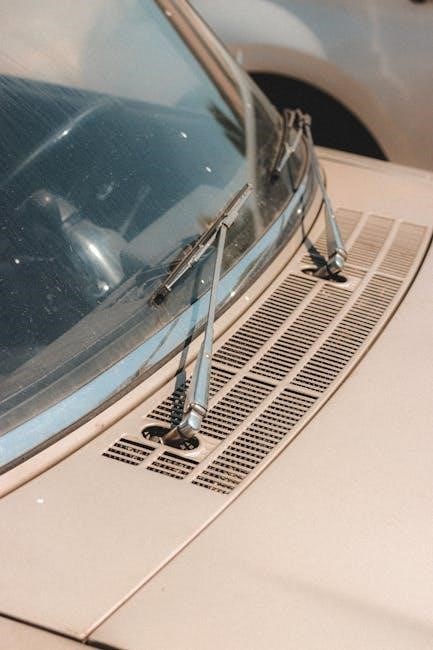
Wiper arms are the structural components that extend from the vehicle’s frame, providing the necessary leverage to move the wiper blades across the windshield․ These arms are typically constructed from metal, designed for durability and resistance to corrosion․ The wiper blades themselves are the rubber or silicone components that make direct contact with the glass, effectively sweeping away rain, snow, and debris․
Blade design is crucial for optimal performance; they must maintain consistent pressure and flexibility to ensure a clean wipe without streaking․ Different blade types exist, including conventional, beam, and hybrid designs, each offering varying levels of performance and longevity․ Proper arm and blade maintenance, including regular inspection and replacement, is vital for maintaining clear visibility and safe driving conditions․ The blade is swung back and forth, pushing impediments from the surface․
Wiper Linkage Mechanism
The wiper linkage mechanism is a critical system translating the driver’s manual force into the sweeping motion of the wiper blades․ This intricate network of rods, levers, and pivots converts rotational movement from the manual wiper motor (or hand operation) into the reciprocating motion required for effective windshield cleaning․
A well-maintained linkage ensures synchronized blade movement across the entire windshield surface․ Lubrication is essential to prevent sticking and ensure smooth operation․ The key parts of the system include the linkage itself, connecting the motor to the wiper arms․ Proper adjustment of the linkage is vital to maintain optimal blade contact and prevent uneven wiping․ Any binding or looseness within the linkage can significantly reduce wiping efficiency and potentially lead to system failure․
Manual Wiper Motor (Hand-Operated)
Unlike modern vehicles, manual wiper systems don’t utilize an electric wiper motor․ Instead, they rely entirely on the driver’s physical effort to operate․ This “motor” is essentially the driver’s hand action, transmitted through a control switch and cable system to the wiper linkage․
The driver initiates the wiping action by manually pulling or pushing a lever, which activates the cable․ This cable then pulls on the linkage, causing the wiper arms and blades to sweep across the windshield․ The force applied directly correlates to the wiping speed and power․ Ensuring the system is internally parked correctly is crucial before disconnection․ While simple, this system demands continuous driver engagement for sustained visibility during precipitation․
Control Switch and Cable System
The control switch in a manual wiper system serves as the crucial interface between the driver’s intention and the wiping action․ Typically a lever or knob, it’s mechanically linked to a robust cable, often a braided steel wire within a protective sheath․ When the driver operates the switch, it tensions or releases this cable․
This cable transmits the force directly to the wiper linkage mechanism, initiating blade movement․ The cable’s length and routing are critical for efficient operation, minimizing friction and ensuring a responsive feel․ Proper cable adjustment is vital; too much slack results in sluggish wiping, while excessive tension can strain the system․ The simplicity of this system relies on the integrity of the cable and switch for reliable performance․
How Manual Wiper Systems Work
Manual wiper systems function through direct mechanical action, converting driver input into blade movement via a linkage, clearing the windshield effectively․

Driver Activation Process
The initiation of operation in a manual wiper system is entirely dependent on the driver’s physical action․ Unlike modern electric systems, there’s no automated trigger․ Typically, this involves the driver pulling a lever, rotating a hand crank, or operating a cable-connected control․ This initial movement directly engages the wiper linkage mechanism․
The force applied by the driver is then mechanically transferred, initiating the sweeping motion of the wiper arms․ The control switch, or its equivalent in lever or crank form, acts as the primary interface, directly dictating when the wipers activate and, in some systems, influencing their speed․ This direct connection provides immediate control but requires continuous driver engagement for sustained operation during rainfall or snow․
Mechanical Linkage Operation
The mechanical linkage is the heart of a manual wiper system, translating the driver’s input into the back-and-forth motion of the wiper blades․ This system typically comprises a series of rods, pivots, and joints meticulously designed to convert rotational or linear force into the desired sweeping arc․ When activated, the driver’s action pulls on a cable or rotates a mechanism, causing these components to move in a coordinated fashion․
This movement is carefully engineered to ensure the wiper arms traverse the windshield effectively, maintaining consistent contact․ The linkage’s geometry dictates the wiping pattern and range, ensuring optimal coverage․ Proper lubrication of these components is crucial for smooth, efficient operation, preventing sticking and ensuring reliable performance in all weather conditions․
Blade Movement and Contact
Effective blade movement is paramount for clear windshield visibility with manual wipers․ The wiper linkage precisely controls the arc of the wiper blades across the glass surface, ensuring consistent contact and efficient removal of rain, snow, or debris․ This sweeping motion isn’t simply a back-and-forth swing; it’s a carefully calibrated path designed to maximize coverage and minimize streaking․
Maintaining adequate pressure between the blade and the glass is vital․ Too little pressure results in ineffective cleaning, while excessive pressure can cause premature wear on both the blade and the glass․ The wiper arms, connected to the linkage, play a critical role in applying this optimal force, ensuring a clean, streak-free wipe every time․
Speed Control in Manual Systems
Unlike modern electric systems, speed control in manual wipers is entirely dependent on the driver’s physical exertion and rhythm․ The rate at which the driver operates the control switch and pulls the cable directly dictates the frequency of the wiper blade movement․ Faster, more forceful operation translates to quicker wiping, while slower, gentler action results in a reduced wiping speed․
This direct correlation means there are no pre-set speeds or intermittent settings as found in electric wipers․ The driver must continuously adjust their input to match the intensity of the precipitation․ Achieving consistent speed requires coordination and can be tiring during prolonged use, highlighting a key limitation of these systems․
Types of Manual Wiper Systems
Manual wiper systems broadly fall into direct drive, cable-operated, and lever-based categories, each utilizing different mechanical approaches to translate driver input into blade motion․
Direct Drive Systems

Direct drive manual wiper systems represent the most straightforward implementation, characterized by a direct mechanical connection between the driver’s control lever and the wiper linkage․ When the driver operates the lever, this action directly forces the linkage to move, causing the wiper blades to sweep across the windshield․ This system eliminates the need for intermediary components like cables, resulting in a responsive and tactile feel․
However, direct drive systems often require significant physical effort from the driver, particularly on larger vehicles or in situations demanding rapid wiping․ The positioning of the control lever is crucial; it must be ergonomically placed for easy access and operation․ These systems were commonly found in older vehicle models, prized for their simplicity and reliability, though they’ve largely been superseded by more convenient electric systems․ Maintaining proper lubrication within the linkage is vital for smooth operation and preventing driver fatigue․
Cable-Operated Systems
Cable-operated manual wiper systems utilize a flexible cable to transmit force from the driver’s control lever to the wiper linkage․ This design allows for greater flexibility in the placement of the control lever, as it doesn’t need to be directly adjacent to the wiper mechanism․ Pulling on the lever tensions the cable, which then actuates the linkage, moving the wiper blades․
A key advantage of cable systems is reduced driver effort compared to direct drive, as the cable provides mechanical advantage․ However, cables are susceptible to stretching and fraying over time, leading to reduced responsiveness and potential failure․ Regular inspection and replacement of the cable are essential for maintaining system functionality․ Proper cable routing is also critical to prevent binding and ensure smooth operation․ These systems offered a balance between simplicity and ease of use in older vehicle designs․
Lever-Based Systems
Lever-based manual wiper systems represent the most direct form of operation, requiring the driver to physically manipulate a lever to activate the wipers․ This lever is directly connected to the wiper linkage, translating the driver’s force into blade movement․ These systems were common in early automotive designs, prioritizing simplicity and minimal componentry․
While incredibly straightforward, lever-based systems demand significant driver effort, particularly during heavy rain or snow․ The lever’s position often requires a constant hold to maintain wiper operation, which can be fatiguing on longer journeys․ Adjustments to wiper pressure and speed are typically limited, relying on the driver’s applied force․ Despite their limitations, lever systems offered a reliable, albeit physically demanding, solution for windshield clearing in the absence of powered alternatives․

Maintenance and Troubleshooting
Regular inspection of wiper blades and lubrication of the linkage are crucial for optimal performance, addressing issues like sticking or slow movement promptly․
Inspecting Wiper Blades
Regularly inspecting wiper blades is paramount for maintaining clear visibility and ensuring the effectiveness of your manual wiper system․ Begin by visually examining the rubber edges of the blades for cracks, tears, or missing sections; any damage compromises their ability to make consistent contact with the windshield․
Next, run your finger along the blade edge – it should feel smooth and pliable, not brittle or hardened․ Hardened blades leave streaks and smears instead of wiping cleanly․ Check for uneven wear, indicating potential issues with wiper arm pressure or windshield surface irregularities․
Finally, test the blades’ performance during a light rain or by spraying windshield washer fluid․ Observe if they leave streaks, chatter, or fail to clear the windshield effectively․ If any of these issues are present, replacement is recommended to guarantee safe driving conditions․
Lubricating the Linkage
Maintaining a smoothly operating wiper linkage is crucial for the effortless function of manual wiper systems․ Over time, the various joints and pivot points within the linkage can become stiff and corroded, leading to sluggish operation or even complete failure․ Regular lubrication addresses this issue effectively․
Begin by identifying all lubrication points within the linkage mechanism․ These typically include the connections between the wiper arms, the manual wiper motor (or hand lever connection), and the central pivot points․ Apply a silicone-based lubricant, as it won’t attract dirt or degrade the rubber components․
Work the lubricant into each joint by manually operating the wiper through its full range of motion․ Ensure thorough coverage and repeat the process if necessary․ Proper lubrication ensures smooth, consistent wiper action and extends the lifespan of the system․
Adjusting Wiper Arm Pressure
Optimal wiper performance hinges on correct wiper arm pressure against the windshield․ Insufficient pressure results in streaking and incomplete clearing, while excessive pressure can cause premature wear on both the blades and the glass․ Adjusting this pressure is a vital maintenance step for manual wiper systems․
Typically, wiper arm pressure is adjusted by carefully bending the arm itself․ A slight bend increases pressure, while straightening it reduces it․ Observe the contact pattern of the wiper blade across the windshield – it should be even and consistent․
Use gentle, controlled movements when bending the arm, avoiding sharp kinks․ Test the adjustment by operating the wipers and checking for improved contact․ Repeat the process until a clear, streak-free sweep is achieved, ensuring consistent performance in all weather conditions․
Addressing Common Issues (Sticking, Slow Movement)
Manual wiper systems, while simple, can encounter issues like sticking or slow movement․ Sticking often stems from corrosion or debris within the wiper linkage, hindering smooth operation․ Thorough cleaning and lubrication of all linkage points are crucial first steps․ Inspect for bent or damaged components that impede movement․
Slow movement frequently indicates insufficient lubrication or a binding cable within the control system․ Applying a suitable lubricant to the cable and linkage can restore responsiveness․ If the wiper motor (hand-operated) feels stiff, it may require disassembly, cleaning, and re-greasing․
Regular maintenance and prompt attention to these issues will ensure reliable wiper function, maintaining clear visibility and safe driving conditions․

Advantages and Disadvantages
Manual wipers boast simplicity and reliability, but lack the convenience and automated functionality of electric systems, offering limited speed control options․
Benefits of Simplicity and Reliability
The core appeal of manual windshield wiper systems lies in their inherent simplicity․ Unlike their electrically powered counterparts, manual wipers require minimal components – primarily wiper arms, blades, a linkage mechanism, and a hand-operated control․ This reduced complexity translates directly into enhanced reliability; fewer parts mean fewer potential points of failure․
Consequently, manual wipers are less susceptible to malfunctions caused by electrical shorts, motor burnout, or sensor errors․ They operate independently of the vehicle’s electrical system, making them a dependable option even if the car’s battery is depleted or the electrical system is compromised․ This robustness is particularly valuable in older vehicles or in situations where maintaining a basic level of visibility is paramount, regardless of the vehicle’s overall condition․ The straightforward design also simplifies maintenance and repair, often requiring only basic tools and knowledge․
Limitations Compared to Electric Systems
Despite their reliability, manual wiper systems face significant limitations when contrasted with modern electric systems․ The most prominent drawback is the continuous physical effort required from the driver to operate them․ Maintaining a clear windshield during heavy rain or snow demands constant manual cranking, diverting attention from steering and other critical driving tasks․
Electric wipers offer variable speed control, allowing drivers to adjust the wiping frequency to match precipitation intensity, a feature absent in most manual setups․ Furthermore, electric systems often include features like intermittent wiping and automatic operation triggered by rain sensors, enhancing convenience and safety․ Manual systems lack these automated functionalities, relying entirely on driver judgment and exertion․ The speed is also limited by the driver’s physical capacity, potentially compromising visibility in severe weather conditions․

Safety Considerations
Manual wipers demand consistent driver attention to maintain visibility; ensuring proper functionality is crucial for safe operation, especially during adverse weather conditions and reduced sight․
Ensuring Proper Functionality
Maintaining a functional manual wiper system is paramount for driver safety․ Regular inspection of the wiper linkage is essential, checking for any signs of corrosion, looseness, or binding that could impede smooth operation․ The wiper arms themselves should be examined for bends or damage, as these can prevent the wiper blades from making consistent contact with the windshield․
Furthermore, the manual wiper motor, or hand-operated mechanism, needs periodic assessment to guarantee effortless activation․ A stiff or unresponsive system indicates a potential issue requiring immediate attention․ Proper lubrication of all moving parts within the linkage minimizes friction and ensures fluid movement․ Finally, verifying the secure attachment of the control cable and switch confirms reliable driver control over the wiper action, contributing to optimal visibility․
Visibility in Adverse Weather
In challenging weather conditions – rain, snow, sleet, or even heavy mist – a properly functioning manual wiper system is critical for maintaining adequate visibility․ The ability to quickly and effectively clear the windshield directly impacts driver reaction time and overall road safety․ Consistent blade contact, achieved through a well-maintained wiper linkage and properly adjusted wiper arms, ensures maximum clearing performance․
Even with diligent operation, manual wipers may require more frequent activation compared to electric systems, demanding sustained driver effort․ Recognizing the limitations of a manual system during severe weather is crucial; reducing speed and increasing following distance are vital supplementary safety measures․ Prioritizing clear vision is paramount when navigating adverse conditions, and a reliable wiper is a key component․
Future Trends and Alternatives
Manual wipers are increasingly rare, superseded by advanced electric wiper systems offering features like rain sensors and variable speed control for enhanced convenience․
The Decline of Manual Wipers
The prevalence of manual windshield wipers has dramatically decreased over the decades, largely due to advancements in automotive technology and consumer expectations․ Initially a standard feature, their reliance on direct physical effort from the driver became a significant drawback as vehicles incorporated more automated systems․ The introduction of affordable and reliable electric wiper motors offered a substantial improvement in convenience, eliminating the need for constant manual operation․
Furthermore, modern vehicles often include features like intermittent wipers, rain sensors, and variable speed control – functionalities simply unattainable with a purely mechanical, hand-operated system․ Safety concerns also played a role, as maintaining consistent visibility during challenging weather conditions requires a level of sustained attention that can be difficult when manually operating the wipers․ Consequently, manufacturers gradually phased out manual wiper systems, prioritizing driver comfort and safety with more sophisticated alternatives․
Modern Electric Wiper Systems
Contemporary electric wiper systems represent a significant evolution from their manual predecessors, offering enhanced functionality and convenience․ These systems utilize a DC electric motor, activated by a control switch, to power the wiper linkage and blades․ This eliminates the physical exertion required by hand-operated systems, allowing drivers to focus solely on steering and road conditions․
Modern systems frequently incorporate features like variable speed control, intermittent operation, and even rain-sensing technology, automatically adjusting wiper speed based on precipitation levels․ The wiper motor’s operation is precisely controlled, ensuring consistent and effective windshield clearing․ Furthermore, advancements in motor design have increased efficiency and reliability․ These systems provide a substantial improvement in visibility and safety, making them the industry standard and effectively replacing the older, manual designs;