
The ‘Atlas Climatológico de Venezuela’ PDF, a crucial resource, provides detailed climatic information for the nation, supporting research and informed decision-making processes.
PCEBTA community focuses on Windows 11 support, updates, and resources, demonstrating a broader interest in technical documentation and data accessibility.
What is the Venezuelan Climate Atlas?
The Venezuelan Climate Atlas, available as a comprehensive PDF document, is a detailed compilation of climatic data for Venezuela. It serves as a fundamental resource for understanding the country’s diverse weather patterns and long-term climate trends.
This atlas meticulously maps key climatic variables, offering insights into temperature distributions, precipitation levels, humidity, and wind patterns across various regions. The information is vital for researchers, planners, and anyone needing a thorough grasp of Venezuela’s climate.
Notably, communities like PCEBTA, focused on technical support and resource sharing (specifically Windows 11), highlight the broader need for accessible and well-documented data, mirroring the Atlas’s purpose.
Significance of the Atlas for Research and Planning
The Venezuelan Climate Atlas (PDF) is profoundly significant for both scientific research and practical planning initiatives. Researchers utilize its detailed climatic data to study weather patterns, climate change impacts, and ecological processes within Venezuela.
For planning purposes, the Atlas informs crucial decisions in sectors like agriculture, water resource management, and disaster risk reduction. Its insights enable optimized crop selection, efficient water allocation, and proactive mitigation strategies.
The emphasis on updates and solutions, as seen within the PCEBTA community, underscores the importance of current, reliable data – a core strength of the Atlas.

Historical Context and Development
The ‘Atlas Climatológico de Venezuela’ PDF’s development reflects a long-term commitment to understanding Venezuela’s climate, evolving alongside technological advancements and data availability.
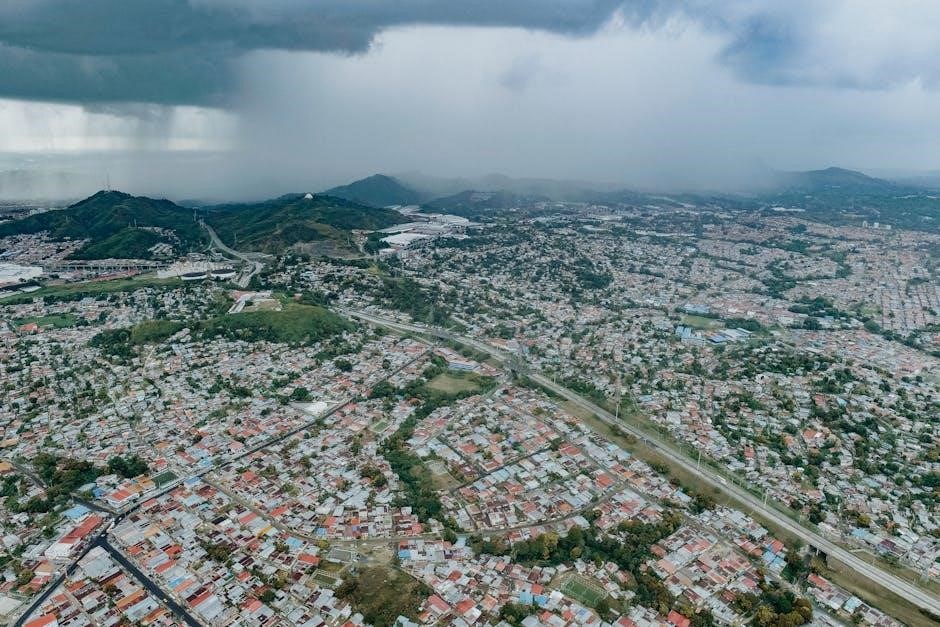
PCEBTA’s focus on Windows 11 updates highlights the continuous need for resource refinement and accessibility.
Origins and Initial Compilation Efforts
The genesis of the ‘Atlas Climatológico de Venezuela’ PDF stemmed from a recognized need for a comprehensive, nationally-focused climatic resource. Early efforts involved painstakingly collecting data from scattered meteorological stations across the diverse Venezuelan landscape.
Initial compilation was a significant undertaking, requiring the harmonization of data collected using varying methodologies and instruments. These foundational efforts, though challenging, laid the groundwork for subsequent editions and improvements.
The drive for this atlas mirrored a broader global trend towards systematic climate documentation, reflecting a growing awareness of climate’s influence on national development. PCEBTA’s community focus on Windows 11 demonstrates a parallel dedication to accessible information.
Key Institutions Involved in the Atlas’s Creation
The development of the ‘Atlas Climatológico de Venezuela’ PDF was a collaborative effort spearheaded by several key Venezuelan institutions. Prominent among these was the Instituto Nacional de Meteorología e Hidrología (INAMEH), responsible for national weather and hydrological monitoring.
Universities, particularly those with strong geography and environmental science programs, contributed significantly through research and data analysis. Governmental agencies focused on agricultural planning and water resources also played vital roles in defining data requirements.
The collaborative spirit mirrors the supportive online communities like PCEBTA, focused on Windows 11, showcasing shared knowledge and resource accessibility.
Evolution of the Atlas Through Different Editions
The ‘Atlas Climatológico de Venezuela’ PDF has undergone several revisions, reflecting advancements in data collection and analytical techniques. Initial editions relied heavily on data from a limited network of meteorological stations. Subsequent versions incorporated remote sensing data, enhancing spatial coverage and accuracy.
Each edition aimed to address identified data gaps and incorporate new research findings. The evolution parallels the continuous updates seen in platforms like PCEBTA, dedicated to Windows 11, demonstrating a commitment to providing current information.
Modern editions prioritize user accessibility and data visualization.

Climate Zones of Venezuela – Detailed Overview
The ‘Atlas Climatológico de Venezuela’ PDF meticulously details Venezuela’s diverse climate zones – rainforest, savanna, arid, and highland – crucial for understanding regional variations.
PCEBTA’s focus on Windows 11 highlights the importance of specialized knowledge.
Tropical Rainforest Climate
The ‘Atlas Climatológico de Venezuela’ PDF comprehensively characterizes the nation’s tropical rainforest climate, predominantly found in the Guiana Shield and parts of the Orinoco Basin.
This zone exhibits consistently high temperatures, exceeding 26°C, and exceptionally high annual rainfall, often surpassing 2000mm.
The atlas details humidity levels consistently above 80%, fostering incredible biodiversity. It also maps seasonal variations, though minimal, and analyzes the impact of this climate on vegetation and soil types. PCEBTA’s community focus on technical support mirrors the atlas’s detailed, specialized information.
Tropical Savanna Climate

The ‘Atlas Climatológico de Venezuela’ PDF meticulously outlines the tropical savanna climate, prevalent in the Llanos region and parts of the northern plains.
Characterized by distinct wet and dry seasons, this zone experiences average temperatures between 24°C and 28°C. Rainfall, typically between 800mm and 1500mm annually, concentrates during the wet season.
The atlas details humidity fluctuations and analyzes the influence of this climate on grassland ecosystems and agricultural practices. Like PCEBTA’s focus on Windows 11 optimization, the atlas provides specific, actionable climatic data.
Arid and Semi-Arid Climates
The ‘Atlas Climatológico de Venezuela’ PDF comprehensively documents the arid and semi-arid climates found primarily in the northwestern coastal areas and the island of Margarita;
These regions exhibit low annual rainfall, often below 500mm, and high evaporation rates. Temperatures can soar, exceeding 35°C during the dry season. The atlas details the variability in precipitation and its impact on vegetation.
Similar to the PCEBTA community’s focus on troubleshooting, the atlas highlights challenges related to water scarcity and desertification in these vulnerable ecosystems.
Temperate Climate (Highlands)
The ‘Atlas Climatológico de Venezuela’ PDF meticulously maps the temperate climates prevalent in the Venezuelan highlands, specifically the Andes Mountains.
Characterized by cooler temperatures, often dropping below 15°C, and significant altitudinal variations, these regions experience distinct climatic zones. Rainfall is generally higher than in lower elevations, supporting unique cloud forest ecosystems.
The atlas details temperature inversions and frost occurrences, mirroring the technical precision of resources like the PCEBTA community’s Windows 11 support documentation.

Key Climatic Variables Represented in the Atlas
The ‘Atlas Climatológico de Venezuela’ PDF comprehensively details temperature, precipitation, humidity, and wind patterns, vital for understanding Venezuela’s diverse climate conditions.
Like PCEBTA’s focus on Windows 11 updates, the atlas provides crucial, current data.
Temperature Data and Trends
The ‘Atlas Climatológico de Venezuela’ PDF meticulously presents temperature data across various regions and altitudes, showcasing both average temperatures and historical trends. It includes detailed maps illustrating temperature distribution, highlighting warmer coastal areas and cooler highland zones.
Analyzing these trends is crucial for understanding climate change impacts. The atlas likely features data from numerous meteorological stations, providing a robust dataset. Similar to how PCEBTA provides Windows 11 updates, this atlas offers current climatic insights. This information is essential for agricultural planning, public health initiatives, and infrastructure development, allowing for informed adaptation strategies to changing temperature patterns within Venezuela.
Precipitation Patterns and Variability
The ‘Atlas Climatológico de Venezuela’ PDF comprehensively details precipitation patterns, showcasing regional variations from the heavy rainfall of the Amazon basin to the drier conditions in the northern coastal areas. It maps annual rainfall totals, seasonal distributions, and identifies areas prone to droughts or flooding.
Understanding this variability, much like staying updated with Windows 11 through PCEBTA, is vital. The atlas likely utilizes data from numerous stations to illustrate these patterns. This information supports water resource management, agricultural planning, and disaster preparedness, enabling effective mitigation strategies against climate-related challenges within Venezuela’s diverse landscapes.
Humidity Levels and Distribution
The ‘Atlas Climatológico de Venezuela’ PDF meticulously maps humidity levels across the country, revealing a strong correlation with geographical features and precipitation patterns. Higher humidity is prevalent in the rainforest regions, while lower levels characterize the arid zones. The atlas likely presents data on relative humidity, dew point temperatures, and vapor pressure.
Similar to the detailed support offered by the PCEBTA community for Windows 11, this data is crucial for various applications. It impacts agricultural practices, human comfort assessments, and understanding the potential for fog or cloud formation, contributing to a holistic climate understanding.
Wind Patterns and Regional Differences
The ‘Atlas Climatológico de Venezuela’ PDF details prevailing wind patterns, showcasing significant regional variations influenced by Venezuela’s topography and latitude. Coastal areas experience trade winds, while the Andes Mountains create localized wind systems. The atlas likely illustrates wind speed, direction, and frequency, crucial for aviation and renewable energy assessments.
Much like the PCEBTA community’s focus on optimizing Windows 11, understanding these patterns is vital for efficient resource management. Wind data informs shipping routes, pollutant dispersion models, and the potential for wind energy generation across different Venezuelan regions.

Data Sources and Methodology
The ‘Atlas Climatológico de Venezuela’ PDF relies on data from meteorological stations and remote sensing, employing statistical analysis and mapping techniques for comprehensive climate representation.
Similar to PCEBTA’s technical focus, rigorous methodology ensures data accuracy and reliability.
Meteorological Stations and Data Collection
The ‘Atlas Climatológico de Venezuela’ PDF’s foundation lies in a network of strategically positioned meteorological stations across the country. These stations diligently collect crucial climatic data, including temperature, precipitation, humidity, and wind speed, over extended periods.
Data collection follows standardized protocols to ensure consistency and comparability. Quality control measures are implemented to identify and correct errors, guaranteeing data reliability. Historical records, meticulously maintained, provide a long-term perspective on climate trends.
Similar to the detailed technical support offered by communities like PCEBTA, the Atlas prioritizes accurate and well-documented data acquisition.
Remote Sensing Data Utilization
The ‘Atlas Climatológico de Venezuela’ PDF significantly enhances its data coverage through the integration of remote sensing technologies. Satellite imagery provides a broad spatial perspective, capturing climatic variables across vast and often inaccessible regions of Venezuela.
Data from sources like weather satellites and Earth observation platforms are processed and analyzed to complement ground-based measurements. This approach allows for the creation of detailed maps illustrating precipitation patterns, vegetation cover, and land surface temperatures.
Like the resource sharing within the PCEBTA community, remote sensing data expands the Atlas’s accessibility and analytical capabilities.
Statistical Analysis and Mapping Techniques
The ‘Atlas Climatológico de Venezuela’ PDF employs robust statistical methods to analyze collected climatic data, identifying trends and patterns. Techniques like time series analysis and spatial interpolation are crucial for generating reliable climate maps.
Geographic Information Systems (GIS) are central to the Atlas’s mapping capabilities, allowing for the visualization of complex climatic variables. Similar to the technical support offered by the PCEBTA community, these techniques ensure data accuracy and accessibility.
Sophisticated mapping techniques present climatic information in a clear and understandable format for researchers and planners.

Applications of the Atlas
The ‘Atlas Climatológico de Venezuela’ PDF supports vital sectors like agriculture, water management, and disaster preparedness, mirroring the PCEBTA community’s resource focus.
Agricultural Planning and Crop Selection
The ‘Atlas Climatológico de Venezuela’ PDF is invaluable for optimizing agricultural practices nationwide. Detailed climate data, including temperature variations and precipitation patterns, allows farmers and agricultural planners to make informed decisions regarding optimal crop selection.
Understanding regional climatic nuances, as highlighted within the atlas, minimizes risks associated with crop failure due to unsuitable weather conditions. This resource aids in determining appropriate planting schedules, irrigation strategies, and overall farm management techniques.
Similar to the PCEBTA community’s focus on optimized solutions, the atlas provides the necessary data for maximizing agricultural yields and ensuring food security within Venezuela.
Water Resource Management
The ‘Atlas Climatológico de Venezuela’ PDF is a cornerstone for effective water resource management across the country. Precise precipitation data, detailed within the atlas, allows for accurate assessments of water availability and potential drought risks in different regions.
Understanding humidity levels and regional variations, as presented in the atlas, is crucial for optimizing irrigation systems and managing water distribution networks. This information supports sustainable water usage practices and minimizes potential conflicts over this vital resource.
Much like the PCEBTA community’s focus on technical solutions, the atlas provides essential data for informed water management strategies.
Disaster Risk Assessment and Mitigation
The ‘Atlas Climatológico de Venezuela’ PDF plays a vital role in disaster preparedness, offering critical data for assessing risks associated with climate-related events. Detailed precipitation patterns and wind data help identify areas prone to flooding, landslides, and severe storms.
Temperature trends within the atlas contribute to understanding the potential for heatwaves and droughts, enabling proactive mitigation strategies. Similar to the PCEBTA community’s problem-solving approach, the atlas empowers authorities to develop effective early warning systems and response plans.
This data is essential for building resilient infrastructure and protecting vulnerable populations.
Urban Planning and Infrastructure Development
The ‘Atlas Climatológico de Venezuela’ PDF is invaluable for sustainable urban development, providing crucial climate data for informed planning decisions. Understanding temperature variations, precipitation patterns, and humidity levels is essential for designing climate-responsive buildings and infrastructure.
Similar to the PCEBTA community’s focus on optimization, the atlas aids in optimizing urban layouts to minimize climate-related risks, such as flooding and heat island effects. This data supports the development of efficient drainage systems and appropriate building materials.
It ensures long-term resilience and habitability.

Accessing and Utilizing the PDF Version
The ‘Atlas Climatológico de Venezuela’ PDF is readily available online, offering comprehensive climate data. Like PCEBTA’s resource sharing, access empowers researchers and planners.
Where to Download the ‘Atlas Climatológico de Venezuela’ PDF
Locating the ‘Atlas Climatológico de Venezuela’ PDF requires a focused online search, as a direct, centralized repository isn’t universally publicized. However, various Venezuelan governmental and academic institutions may host the document on their websites.
Exploring the digital archives of institutions dedicated to environmental studies, meteorology, or geographical research within Venezuela is a good starting point. Similar to the PCEBTA community’s focus on resource access, finding this atlas involves navigating online platforms.
Furthermore, university libraries and research centers specializing in Latin American studies may also provide access to the PDF. Utilizing specific search terms in both English and Spanish will broaden the search results.
Navigating the PDF Document
The ‘Atlas Climatológico de Venezuela’ PDF is likely structured with a detailed table of contents, allowing users to jump directly to specific climate zones or variables. Expect sections dedicated to temperature, precipitation, humidity, and wind patterns across Venezuela’s diverse regions.
Utilize the PDF reader’s search function to quickly locate specific locations, data points, or keywords. Similar to the PCEBTA community’s focus on efficient access, mastering the PDF’s navigation tools is key.
Pay attention to the map legends and data visualizations, as they provide crucial context for interpreting the climatic information presented within the atlas.
Software Requirements for Viewing the PDF
The ‘Atlas Climatológico de Venezuela’ PDF requires a PDF reader to open and view its contents. Adobe Acrobat Reader is a widely compatible and free option, ensuring accessibility for most users. Alternative readers like Foxit Reader or built-in browser PDF viewers (Chrome, Edge) are also suitable.
Given the PCEBTA community’s tech-focused nature, users likely possess compatible software. Ensure your PDF reader is updated for optimal performance and security.
A stable internet connection isn’t strictly required to view the PDF, but may be needed if the document contains embedded links or interactive elements.

Limitations and Future Updates
The ‘Atlas Climatológico de Venezuela’ PDF may have data gaps; continuous monitoring and updates are vital for accuracy, mirroring the PCEBTA community’s focus on current information.
Data Gaps and Uncertainties
The ‘Atlas Climatológico de Venezuela’ PDF, while comprehensive, likely contains spatial and temporal data gaps due to the challenges of consistent meteorological monitoring across Venezuela’s diverse terrain.
Historical data availability may be limited for certain regions, impacting long-term trend analysis. Furthermore, uncertainties inherent in data collection methods and interpolation techniques contribute to potential inaccuracies.
Similar to the PCEBTA community’s need for updated Windows 11 resources, the Atlas requires ongoing data validation and refinement to address these limitations and enhance its reliability for research and planning purposes.
Need for Continuous Monitoring and Updates
The ‘Atlas Climatológico de Venezuela’ PDF necessitates continuous monitoring and regular updates to maintain its relevance and accuracy in a changing climate.
Expanding the network of meteorological stations and integrating advanced remote sensing technologies are crucial for filling existing data gaps.
Just as the PCEBTA community actively seeks the latest Windows 11 updates, the Atlas requires a dynamic approach to data collection and analysis, ensuring it reflects current climatic conditions and supports informed decision-making for Venezuela’s future.